What Happens When You Skip HVAC Maintenance? A Year-by-Year Breakdown
Skipping HVAC maintenance reduces system efficiency by 5% per year on average, increases the probability of a major breakdown by roughly 30-40% over a five-year period, and shortens equipment lifespan by 3 to 7 years compared to a well-maintained system. In the Savannah area, where extreme humidity and extended cooling seasons put more stress on HVAC equipment than most U.S. markets, the degradation curve is steeper and the consequences arrive faster than national averages suggest.
Every HVAC company tells you maintenance is important. Most explain it with vague statements about “extending the life of your system” without quantifying what that actually means in dollars, timeline, or specific mechanical outcomes. The reality is that deferred maintenance follows a predictable pattern — not identical for every system, but consistent enough that a technician can look at an unmaintained unit and estimate within a year or two how long it has been neglected. Here is what that timeline actually looks like, year by year, for a typical residential system operating in coastal Georgia’s climate.
Year One: The Invisible Decline
During the first year without maintenance, almost nothing feels different to the homeowner. The system cools the house, the thermostat reaches setpoint, and the electric bills look roughly normal. This is the year that convinces people maintenance is optional — everything seems fine, so why pay $150 for a tune-up?
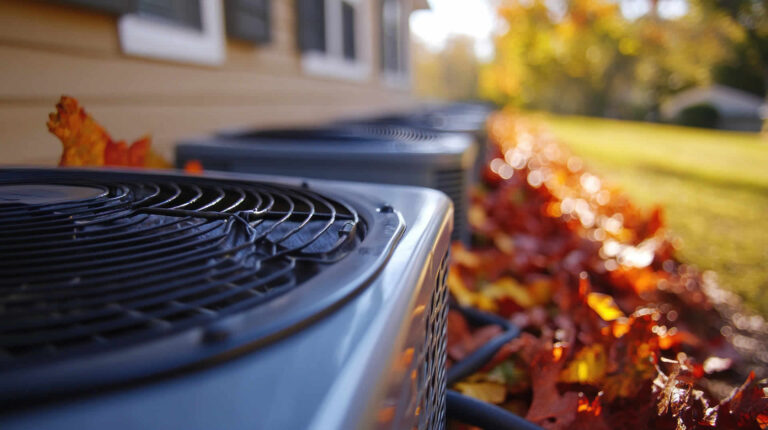
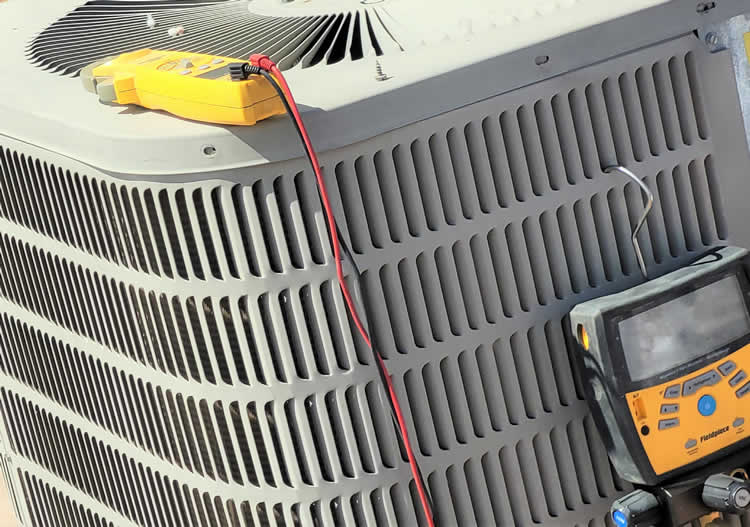
What is actually happening is invisible but measurable. The condenser coil has accumulated a season’s worth of pollen, dirt, and in coastal areas, salt deposits. That layer of buildup reduces the coil’s ability to reject heat by 5-10%, which means the compressor runs slightly longer each cycle to achieve the same cooling output. The difference on any single day is a few extra minutes of runtime. Over a full Savannah cooling season — roughly 180 days of operation — those extra minutes compound into 50 to 100 additional hours of compressor runtime compared to a clean system.
The condensate drain line has begun developing algae growth internally. In Savannah’s humidity, where the system pulls 10 to 20 gallons of water per day from the air during peak summer, the warm, moist environment inside the drain line is a perfect biological incubator. The line is not clogged yet, but the growth has started.
The capacitor, contactor, and other electrical components have absorbed another year of power surges from Savannah’s summer thunderstorms and thermal cycling from the 40-degree daily temperature swings between daytime highs and nighttime lows. No measurable degradation yet, but the cumulative stress clock is ticking.
Your energy bill during this first year is perhaps 3-5% higher than it would be with maintenance. On a home spending $250 per month on electricity during summer, that is $8 to $13 per month — real money over a season, but not enough to notice against normal billing fluctuations.
Year Two: Efficiency Erosion Becomes Measurable
By the second year without maintenance, the condenser coil has two seasons of accumulated buildup, and the efficiency impact is now in the 8-15% range. The system is working noticeably harder — not to the homeowner, who has adjusted gradually, but measurably in terms of runtime hours and energy consumption.
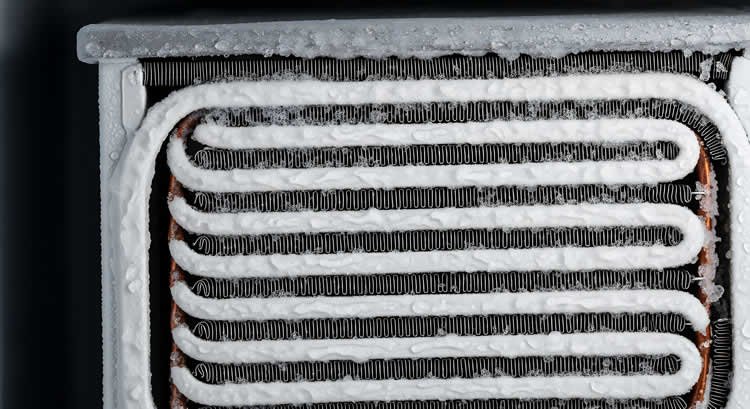
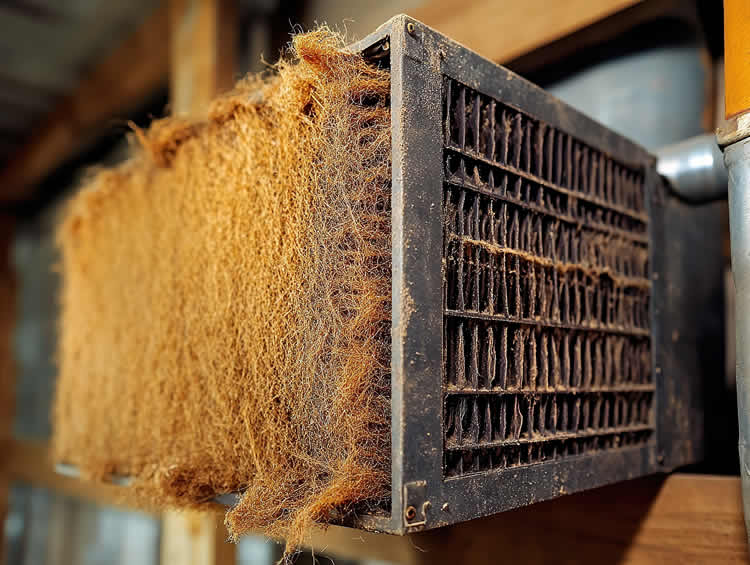
The evaporator coil inside the air handler is now accumulating dust and biological growth on its surface. Without an annual cleaning or even a professional visual inspection, this buildup goes unnoticed. In Savannah’s humid environment, the persistently wet coil surface has become a thriving ecosystem for mold and bacteria. The air quality impact is real but often attributed to seasonal allergies rather than the HVAC system itself. Homeowners with respiratory sensitivities may notice increased symptoms indoors without connecting the cause.
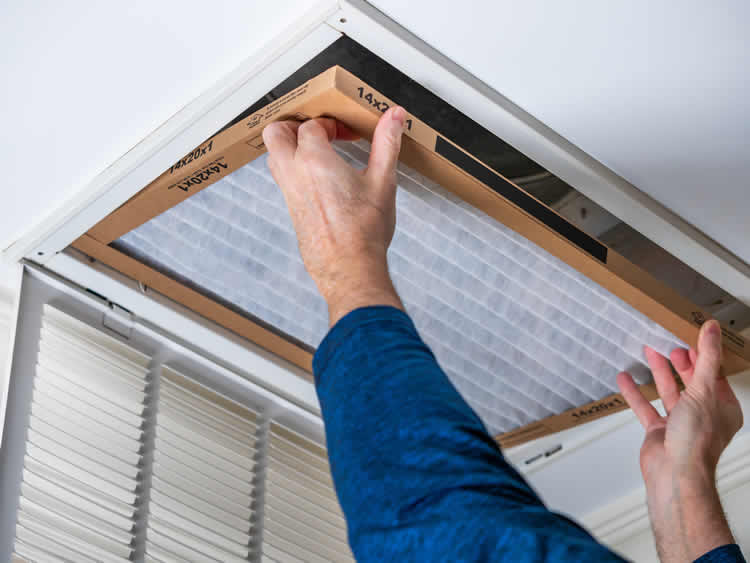
The air filter has either been replaced intermittently by the homeowner or — in a surprising number of homes — not replaced at all since the last professional visit. A filter that has been in place for 6 to 12 months in Savannah’s pollen-heavy environment is not just clogged, it is functionally a wall. Airflow restriction at this level causes measurable temperature differential problems — some rooms are comfortable while others are warm — and the blower motor is drawing higher amperage to push air through the obstruction.
The condensate drain line is now partially restricted. Drain flow is slower, and during peak humidity days the drain pan may hold standing water that would normally flow through freely. No overflow yet, but the margin is shrinking.
Your energy bill premium has grown to 8-12% above what a maintained system would cost. That is $20 to $30 per month during cooling season, or $120 to $210 over the summer. Cumulative wasted energy over two years: $180 to $350. The cost of two annual tune-ups would have been $160 to $400. The math is already close to break-even on energy savings alone, without counting any mechanical benefits.
Year Three: The First Consequences Arrive
Year three is typically when the first tangible failures hit. The specific failure varies by system, but the pattern is remarkably consistent.
The capacitor is the most likely first casualty. Capacitors in the Savannah area have an average lifespan of 5 to 8 years under normal conditions, but heat stress from a dirty condenser coil — which forces the compressor and fan motor to run hotter — accelerates capacitor degradation. A capacitor that would have lasted 7 years on a maintained system may fail at year 5 or 6 on an unmaintained one. If your system was 3 years old when you stopped maintaining it, you are now looking at a potential capacitor failure on a 6-year-old system that should not need one for another year or two.
A capacitor failure is not catastrophic — it is a $150 to $300 repair. But because you do not have a maintenance relationship with an HVAC company, you are calling as a new customer during what is probably the hottest week of summer, because that is when capacitors fail most often. New customer emergency calls during peak season mean longer wait times, higher diagnostic fees, and no priority scheduling. What would have been a $150 fix during a routine maintenance visit becomes a $300 emergency repair after a two-day wait with no AC.
The condensate drain is now significantly restricted or fully clogged. If you are lucky, the system has a safety float switch that shuts off the unit before the drain pan overflows. If the safety switch is present and functional, the system simply stops cooling and you call for service — annoying but not damaging. If the switch is absent, malfunctioning, or was never installed (common in older installations), the drain pan overflows. For air handlers in attics — standard in many Pooler and Savannah-area homes built after 2000 — a drain overflow sends water through the ceiling, damaging drywall, insulation, and potentially flooring in the rooms below. Water damage repair from an attic-mounted overflow routinely costs $1,000 to $5,000, depending on how long the overflow continued before discovery.
System efficiency is now 12-20% below its original rating. Your energy bills reflect this, but because the increase happened gradually — a few dollars more each month over three years — most homeowners have not connected the trend to their HVAC system. They attribute it to rate increases, a hot summer, or general inflation.
Years Four and Five: Compounding Failures
By year four, the system is operating in a state of sustained stress that accelerates wear on every remaining component. The dirty condenser coil has been forcing the compressor to run against elevated head pressure for four summers. The evaporator coil is insulated by biological growth that reduces heat transfer. The blower motor has been compensating for airflow restrictions by drawing excess amperage, which generates heat in the motor windings.
Refrigerant leaks become more likely during this period. The vibration from an overworked compressor stresses brazed joints and flare connections. The thermal cycling from extended runtime causes copper refrigerant lines to expand and contract more than they would under normal operating conditions. Formicary corrosion on the evaporator coil — accelerated by years of persistent moisture and airborne chemical compounds in an unmaintained system — may produce the first pinhole leaks.
A refrigerant leak on an unmaintained system is particularly expensive because the technician now has to address multiple deferred issues simultaneously. The leak itself might cost $400 to $900 to repair and recharge. But the technician also finds a condenser coil that needs chemical cleaning, an evaporator coil with mold growth, a drain line that needs clearing, electrical components that are marginal, and a filter that is a biohazard. What should have been a $400 leak repair becomes a $1,200 catch-up service because everything is degraded.
The compressor itself is now at elevated risk. Four to five years of running against dirty coils, with potentially low refrigerant, drawing higher-than-rated amperage, and experiencing repeated power surges without the electrical buffer that a good capacitor provides — this cumulative abuse has shortened the compressor’s remaining life by years. A compressor rated for 15 years of service might now be on track for 10 or 11 years, and those final years will be increasingly unreliable.
Years Six Through Ten: The Expensive Reckoning
By year six without maintenance, the system has aged mechanically far beyond its calendar age. A 10-year-old unmaintained system in Savannah is operating with the wear profile of a 14 or 15-year-old maintained system. The efficiency loss is now 20-30%, meaning a system originally rated at 14 SEER is effectively performing at 10 to 11 SEER.
Major component failures become probable rather than possible during this period. Compressor failure, evaporator coil failure, blower motor failure — any of these can cost $800 to $2,500 individually, and on a system this degraded, they tend to cascade. Replacing the compressor on a system with a corroded evaporator coil, a marginal blower motor, and compromised electrical components is pouring money into a system that will fail again within a year or two on a different component.
This is the period when most homeowners face the full financial consequence of deferred maintenance. The choice is no longer between a $150 tune-up and not spending anything — it is between a $2,000 repair on a system that may need another $2,000 repair next year, or a $6,000 to $12,000 system replacement that was going to happen eventually but is arriving 3 to 5 years earlier than it should have.
The Cumulative Cost Comparison
Over a 15-year system lifespan in the Savannah market, the financial difference between a maintained and unmaintained system is stark.
A maintained system costs roughly $150 to $300 per year in tune-ups, or $2,250 to $4,500 over 15 years. It delivers lower energy bills by an estimated cumulative $2,000 to $5,000 over its lifespan. It experiences fewer emergency repairs — perhaps $1,000 to $3,000 in total repair costs over 15 years. And it reaches its full 15-year design life, maximizing the return on the original equipment investment.
An unmaintained system saves $2,250 to $4,500 in skipped tune-ups. But it pays an estimated $2,000 to $5,000 more in energy costs over its shorter lifespan. It accumulates $3,000 to $8,000 in repair costs, including emergency calls and catch-up service. And it fails 3 to 7 years earlier than it should, requiring a premature replacement costing $6,000 to $12,000 — effectively transferring the cost of a new system forward by half a decade.
The net cost of skipping maintenance over a system’s life is not the $2,250 to $4,500 you saved on tune-ups. It is a net loss of $5,000 to $15,000 in excess repairs, wasted energy, and premature replacement. That is the real answer to “is HVAC maintenance worth it,” and it is why every honest technician in the industry pushes it.
The Warranty Factor Most Homeowners Miss
Most major HVAC manufacturers — Carrier, Trane, Lennox, Goodman, Rheem — require documented professional maintenance to honor their extended parts warranty. The standard warranty structure is a 5-year base parts warranty that applies regardless of maintenance, plus a 5-year extended warranty (for a total of 10 years) that is conditional on annual professional maintenance and system registration within 60 days of installation.
If your compressor fails in year 7 and you file a warranty claim, the manufacturer can deny coverage if you cannot provide maintenance records for each year of ownership. That denial converts a $500 to $900 labor-only repair (with the compressor covered under warranty) into a $1,800 to $2,500 full-cost replacement. The maintenance records that would have protected you would have cost $150 per year. Seven years of maintenance at $150 per year totals $1,050 — the exact amount you might save on a single warranty-covered repair.
This is not a hypothetical concern. Warranty denial for lack of maintenance documentation is one of the most common disputes in residential HVAC, and the manufacturer almost always wins because the maintenance requirement is stated clearly in the warranty terms that homeowners receive at installation and rarely read.
Starting Maintenance After a Gap
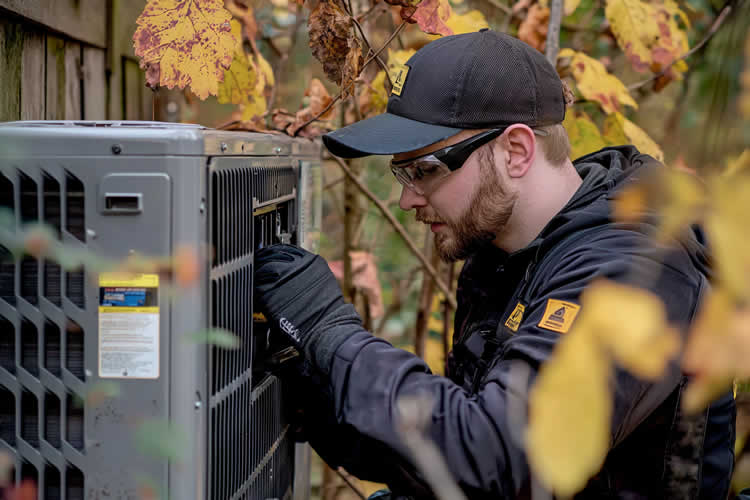
If you have not had your system maintained in two or more years, the first visit back should be more comprehensive than a standard tune-up. Let the technician know how long it has been so they can plan accordingly — a system that has been neglected for three years needs a thorough cleaning and inspection that takes longer than a routine annual visit, and it may cost more. This is normal and appropriate, not an upsell.
At Carriage Heating & Cooling, we see systems at every stage of maintenance neglect, and we approach each one without judgment. Our goal is to assess the current condition honestly, address the most critical issues first, and get the system onto a regular maintenance schedule going forward. Whether your system was last serviced six months ago or six years ago, call (912) 306-0375 to schedule an assessment anywhere in Pooler, Savannah, Richmond Hill, or the surrounding area.
[IMAGE: Split image showing a clean maintained outdoor AC condenser unit on one side and a heavily soiled neglected unit with debris and dirty coils on the other | Alt text: Comparison of a well-maintained outdoor AC condenser unit versus a neglected unit with dirty coils and debris buildup in a Savannah area residential setting]