Thermostat Setting for the Best Night’s Sleep
Comfort is key to achieving restorative sleep, and your thermostat plays a vital role in this equation. Finding the optimal temperature setting can significantly enhance your rest and overall well-being. In this guide, you’ll learn the ideal temperature range for your bedroom, how to adjust your thermostat effectively, and tips for maintaining a sleep-friendly environment. Say goodbye to restless nights and hello to rejuvenating sleep by implementing the right thermostat settings tonight!
Understanding Sleep Temperature
A restful night’s sleep is significantly influenced by your sleep environment, particularly the temperature of your bedroom. Your body naturally cools while sleeping, making the right temperature important for comfortable rest. Below is a breakdown of how temperature impacts your overall sleep quality.
| Factor | Effect |
|---|---|
| Bedroom Temperature | It affects your ability to fall and stay asleep. |
| Humidity Levels | It can impact how hot or cold you feel. |
| Airflow Quality | It helps maintain the ideal sleep temperature. |
Ideal Temperature Range
One of the most recommended temperature ranges for achieving the best sleep is between 65-68°F. This range allows your body to naturally drop in temperature, signaling it is time to rest. Check the table below for more insights into temperature preferences.
| Temperature (°F) | Perceived Comfort |
|---|---|
| 65 | Optimal for deep sleep. |
| 68 | Comfortable for most individuals. |
| Over 70 | It may cause restlessness. |
Importance of Temperature Regulation
You might not realize it, but maintaining a consistent temperature is vital for a good night’s sleep. Fluctuations can disrupt sleep cycles, particularly during the REM phase when your body’s temperature regulation is adequate. The table below highlights the significance of temperature regulation for sleep quality.
| Temperature Regulation | Impact on Sleep |
|---|---|
| Consistent Temperature | Enhances overall sleep quality. |
| High Temperature | This may lead to fragmented sleep. |
| Low Temperature | It can cause discomfort and wakefulness. |
Regulating your bedroom temperature can significantly enhance your ability to experience undisturbed sleep. Consistently maintaining an optimal temperature helps your body transition smoothly through different sleep stages, especially during REM sleep when your body’s natural thermoregulation is at its least effective. Aim for a range that supports comfort and relaxation for the best results.
| The benefit of Temperature Regulation | Outcome |
|---|---|
| Improved Sleep Quality | Decreases sleep disruptions. |
| Stable Sleeping Environment | Promotes comfort and relaxation. |
| Increased Comfort | Aids in quicker sleep onset. |
How to Set Your Thermostat for Optimal Sleep
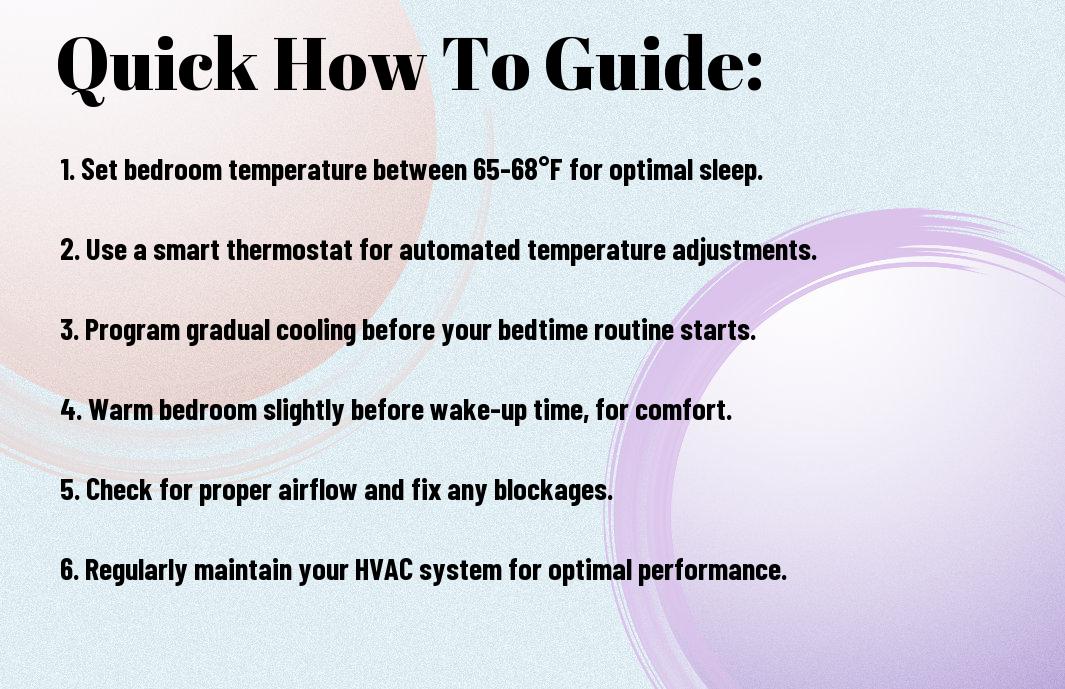
Some experts recommend maintaining a bedroom temperature between 65-68°F to promote restful sleep. To achieve this ideal range, you can adjust your thermostat settings or utilize innovative technology to ensure your environment is conducive to a good night’s sleep.
Smart Thermostat Features
When you choose a smart thermostat, please look for features that allow you to schedule temperature adjustments automatically. These features can make it easy to create a sleep-friendly climate by lowering the temperature before bedtime and warming it gently before you wake up.
Programming Your Thermostat
Programming your thermostat is vital for optimizing your sleep environment. By setting specific temperatures for different times of the day, you can ensure that your bedroom is cool when you’re ready to sleep and comfortable when you wake up.
Your smart thermostat can often be programmed to gradually lower the temperature in the evening, signaling to your body that it’s time to relax. Many models allow you to customize schedules for weekdays versus weekends, ensuring that you consistently maintain this ideal temperature range, even if your daily routine shifts. This proactive approach helps create a more restful environment for deeper, more uninterrupted sleep.
Tips for Maintaining Ideal Bedroom Conditions
Not achieving restful sleep can often be linked to your bedroom’s environment. Here are some tips to help maintain optimal conditions:
- Set your thermostat between 65-68°F.
- Invest in blackout curtains to reduce light.
- Limit screen time before bed to enhance sleep quality.
- Schedule regular HVAC maintenance to ensure efficiency.
Thou possess the ability to transform your sleep experience!
Insulation and Drafts
Now is the time to check your home’s insulation and ensure no drafts affect your sleep environment. Proper insulation keeps your bedroom temperature stable, making upholding that ideal 65-68°F range easier. Investing in quality insulation can significantly reduce temperature fluctuations, leading to a more restful night’s sleep.
Humidity Control
Humidity levels are another factor affecting sleep quality, so finding a balance is crucial. The ideal indoor humidity level is between 30% and 50%. High humidity can make your room feel warmer, while low humidity can cause discomfort and dry air.
Plus, using a humidifier in dry months or a dehumidifier in the humid summer can make a substantial difference. Adding a hygrometer will allow you to monitor humidity levels accurately. Targeted adjustments will ensure that you create the most comfortable environment for sleep while contributing positively to your overall well-being. Aim to balance humidity and temperature for the best night’s rest!

Factors Influencing Sleep Environment
Unlike a simple shut-eye, several key factors influence your sleep environment, ensuring you achieve restful slumber. Consider how these elements work together:
- Temperature settings
- Noise levels
- Humidity control
- Lighting conditions
- Mattress and bedding choices
Thou must pay attention to these aspects to create the ideal sleep sanctuary.
Noise Levels
While a quiet environment fosters deeper sleep, unwanted noise can disrupt your rest and affect overall sleep quality. Sounds from outside or even mechanical noises from your HVAC system can interfere with your ability to fall and stay asleep. Soundproofing techniques or white noise machines can help mitigate these disturbances, allowing for a more peaceful night.
Mattress and Bedding Choices
Mattress quality directly impacts your sleep, supporting your body and maintaining spinal alignment. Choosing bedding that suits your comfort preferences contributes significantly to your overall sleep experience.
It’s necessary to select a mattress that addresses your sleeping position and any specific discomforts you may have. Additionally, consider breathable sheets and blankets that regulate temperature, as experts recommend setting your bedroom between 65-68°F for optimal sleep. Investing in quality bedding enhances comfort and promotes a restful night when paired with the proper HVAC settings.
Troubleshooting HVAC Issues
All HVAC systems can experience issues that impact sleep quality. If your bedroom temperature is inconsistent or uncomfortable, it may be time to troubleshoot your HVAC system. The objective is to identify the causes of temperature fluctuations and take corrective measures to ensure a restful night’s sleep.
Identifying Common Problems
Little signs can indicate more significant issues with your HVAC system. Look out for drafty rooms, uneven temperatures, or increased energy bills, as these could suggest problems like leaky ducts or improper airflow management that can hinder your comfort at night.
Solutions for Temperature Fluctuations
Troubleshooting your HVAC system requires targeted solutions for common temperature issues. Below is a table to help you resolve these fluctuations effectively:
| Leaky Air Ducts | Could you seal leaks with duct tape or hire a professional for a thorough inspection? |
| Slow Fan Speed | Please check the fan settings and consider upgrading to a variable-speed fan. |
| Kinked or Blocked Ductwork | Could you look at the ducts for obstructions and clear any blockages? |
| Incorrect Unit Size | Could you consult with an HVAC specialist to evaluate your unit’s capacity? |
| Duct Dampers Need Adjustment | Adjust dampers to enhance airflow balance between rooms. |
This approach simplifies troubleshooting by giving you actionable solutions to common HVAC issues. Addressing these problems can create a more stable and comfortable sleep environment, ensuring your bedroom temperature is within the ideal range of 65-68°F. Paying attention to your HVAC system can lead to deeper, more restful sleep, benefiting your overall well-being.
Long-term HVAC Strategies for Better Sleep
Once again, creating an optimal sleep environment involves thinking long-term about your HVAC system. By adopting sustainable strategies tailored to your lifestyle, you can ensure your bedroom remains a sleep haven throughout the year. Consider integrating innovative technology and regularly evaluating your HVAC setup to maintain that ideal temperature range of 65-68°F, vital for quality rest.
Regular Maintenance
Regular maintenance of your HVAC system is vital for maximizing sleep quality. Regular check-ups will help identify and resolve potential issues, such as leaky ducts or slow fan speeds. This proactive approach ensures your system operates efficiently, keeping your bedroom at the perfect temperature for uninterrupted sleep.
Upgrading Your System
Some homeowners may find that upgrading their HVAC system significantly enhances sleep comfort. As technology evolves, more efficient and sophisticated systems become available, offering better bedroom air regulation and temperature control.
Regular advancements in HVAC technology facilitate improved airflow and energy efficiency. Modern systems often feature variable-speed motors and enhanced filtration, which work to maintain a consistent temperature and air quality. By upgrading, you can better achieve that ideal sleep temperature and ensure that your HVAC setup supports your overall well-being, allowing for deep, restful sleep every night.
Summing up
Ultimately, setting your thermostat between 65-68°F can significantly enhance your sleep quality. Creating a cool and comfortable environment allows your body to naturally lower its temperature, signaling it’s time to rest. Incorporating innovative technology can further optimize this experience, ensuring your bedroom is always at the ideal temperature when you retire for the night. Prioritizing your HVAC settings will improve sleep, mood, and overall well-being.