Indoor Air Quality in Savannah: Why Coastal Humidity Makes It Worse
Indoor air quality in Savannah is worse than most homeowners realize, and humidity is the primary driver. When outdoor relative humidity routinely sits between 70% and 90% for six or more months of the year, the moisture that infiltrates your home creates ideal conditions for mold growth, dust mite proliferation, volatile organic compound amplification, and bacterial colonization on HVAC surfaces — all of which degrade the air you breathe indoors.
The EPA estimates that indoor air is typically two to five times more polluted than outdoor air nationally, and in high-humidity coastal markets like Savannah, the ratio skews toward the upper end of that range.
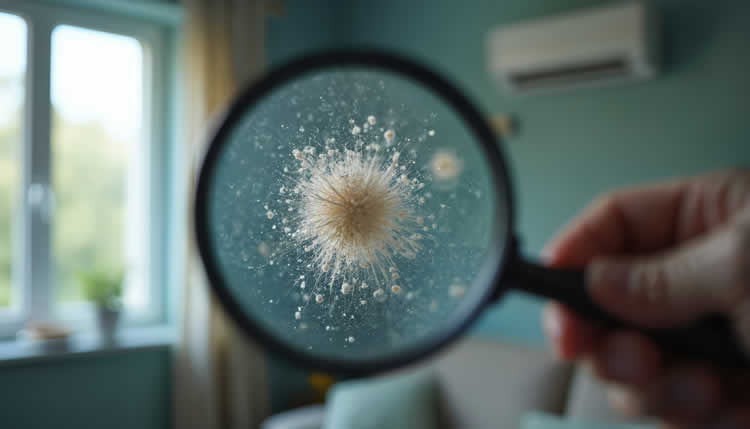
The challenge is that most indoor air quality problems are invisible. You cannot see mold spores floating through your ductwork. You cannot smell dust mite allergens accumulating in carpet and upholstery. You do not notice the gradual buildup of biological contamination on your evaporator coil because it is sealed inside the air handler.
What you notice are the symptoms — persistent congestion, worsening allergies indoors, musty odors that cleaning does not resolve, foggy windows, and a general feeling that the air in your home is heavy or stale. These symptoms are common enough in the Savannah area that most people attribute them to seasonal allergies or living near the coast rather than recognizing them as signs of a controllable indoor air quality problem.
How Humidity Creates Air Quality Problems
Humidity does not just make air feel uncomfortable. It fundamentally changes the biology and chemistry of your indoor environment in ways that directly degrade the air you breathe.
Mold requires three things to grow: moisture, a food source, and a temperature between 60°F and 80°F. In Savannah, the temperature range is met year-round in conditioned spaces, and food sources — dust, wood, drywall paper, fabric — are present in every home.
The only variable is moisture, and in a climate where outdoor dew points regularly exceed 70°F from May through October, moisture is not a variable at all. It is a constant. Every time an exterior door opens, every gap in the building envelope, every imperfectly sealed window lets humid outdoor air enter the conditioned space, bringing moisture that condenses on cool surfaces and absorbs into porous materials.
Indoor relative humidity above 60% activates mold growth on surfaces. Above 70%, mold grows aggressively and colonizes areas that would remain clean in drier environments — the backside of drywall, inside wall cavities, on the underside of carpet padding, and throughout ductwork. The Savannah area’s outdoor humidity regularly pushes indoor levels above 60% in homes where the HVAC system is not managing moisture effectively, either because the system is oversized (short-cycling before adequate dehumidification occurs), the system is aging and losing dehumidification capacity, or the home has significant air infiltration that overwhelms the system’s moisture removal ability.
Dust mites thrive in the same humidity range that promotes mold. These microscopic organisms live in bedding, upholstered furniture, carpet, and any fabric that holds warmth and moisture. They do not bite or transmit disease, but their waste products are one of the most potent indoor allergens known. Dust mite populations explode when indoor relative humidity stays above 50%, and they decline sharply when humidity drops below 40%. In Savannah homes without active humidity management, dust mite populations can be 5 to 10 times higher than in equivalent homes in arid climates — a difference that explains why allergies often seem worse indoors than outdoors, even when pollen counts are low.
Volatile organic compounds — the chemical off-gassing from paint, flooring, furniture, cleaning products, and building materials — become more concentrated in humid air because moisture increases the rate at which these chemicals release from solid materials into the air. A home with new carpet or recently painted walls off-gasses measurably more VOCs in Savannah’s humidity than the same home in Denver’s dry air. The health effects of chronic low-level VOC exposure include headaches, respiratory irritation, and fatigue — symptoms so generic that they are almost never attributed to indoor air chemistry.
Your HVAC System: Part of the Problem or Part of the Solution
Your air conditioning system is the single largest influence on indoor air quality in any Savannah home, for better or worse. When it is functioning correctly and appropriately sized, it manages humidity, filters airborne particles, and circulates fresh conditioned air throughout the house. When it is malfunctioning, poorly maintained, or incorrectly sized, it becomes a distribution system for the exact contaminants it should be removing.
The evaporator coil is the front line of both cooling and dehumidification. As warm, humid indoor air passes over the cold coil surface, the temperature drop causes moisture to condense out of the air and drip into the drain pan below. A clean coil with proper airflow removes 10 to 20 gallons of water per day from a typical Savannah home during peak summer. That is an enormous volume of moisture being extracted from your indoor air every 24 hours, and it is the primary mechanism keeping indoor humidity manageable.
A dirty evaporator coil reduces this moisture removal capacity in two ways. The buildup on the coil surface acts as insulation, reducing the temperature drop that causes condensation. And the narrowed gaps between fins restrict airflow, which means less humid air contacts the coil per minute of operation. A coil that has not been cleaned in three or more years may have lost 15-25% of its dehumidification capacity — enough to push indoor humidity from a comfortable 48% up to a problematic 58% or higher, even though the system still appears to cool the air adequately by temperature measurement.
Worse, the biological growth on a neglected evaporator coil — mold, bacteria, and biofilm that thrive on the perpetually wet surface — becomes airborne every time the blower runs. The air blowing through your supply registers has passed directly over this contaminated surface, carrying microscopic organisms into every room. You are not just breathing stale air. You are breathing air that has been actively contaminated by the system that is supposed to be cleaning it.
The condensate drain system is the second critical component. Every drop of moisture the evaporator coil removes must exit the home through the drain line. In Savannah’s humidity, this drain line handles a volume that would be unusual in drier markets, and the warm, wet interior of the line is a prime environment for algae and bacterial slime. A partially clogged drain slows water evacuation from the drain pan, creating standing water directly beneath the evaporator coil — a stagnant pool in a dark, warm enclosure that produces musty odors distributed throughout the house via the duct system.
Ductwork is the circulatory system of your home’s air, and in many Savannah-area homes, it runs through unconditioned attics where summer temperatures exceed 140°F. The temperature differential between the cool air inside the ducts and the superheated attic air causes condensation on the exterior of duct surfaces, particularly on poorly insulated sections and at connection joints. This condensation, combined with dust that accumulates inside ductwork over years, creates yet another moisture-plus-organic-material environment where mold colonizes and spreads. Homes with flexible ductwork in attics are particularly susceptible because flex duct insulation deteriorates in extreme heat, and sagging sections trap condensate inside the duct runs.
Measuring Indoor Air Quality: What to Look For
You do not need professional equipment to get a useful baseline reading of your indoor air quality. A digital hygrometer — available for $10 to $30 at any hardware store — measures indoor relative humidity, and that single number tells you more about your air quality risk than any other measurement.
Target indoor relative humidity of 45-55% during the cooling season. Below 40% causes dry skin, static electricity, and respiratory irritation. Above 55% promotes mold growth and dust mite proliferation. Above 60% is actively problematic and indicates that your HVAC system is not managing moisture adequately for the conditions.
Place the hygrometer in a central living area away from direct airflow from supply registers, which produce artificially dry readings because the air has just been dehumidified at the coil. The reading in the center of a room with the door open gives you the most representative measurement of your home’s actual humidity level.
If your indoor humidity consistently reads above 55% while the AC is running, the system is not dehumidifying adequately. The most common causes are an oversized system that short-cycles, a dirty evaporator coil that has lost dehumidification capacity, a refrigerant charge that is too low, or air infiltration that exceeds the system’s moisture removal rate. Each of these is diagnosable and fixable — but the first step is measuring and recognizing the problem.
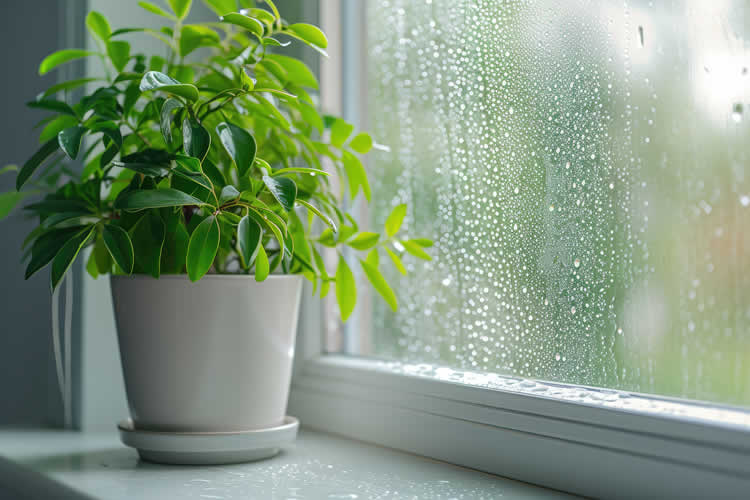
Beyond humidity, be attentive to persistent musty odors, visible condensation on windows or cold surfaces (supply registers, toilet tanks, cold water pipes), worsening allergy symptoms when spending time indoors, and any visible mold growth on walls, ceilings, or around window frames. These are downstream indicators of humidity levels that have been too high for too long.
Solutions That Actually Work in Savannah
Managing indoor air quality in a coastal Georgia climate requires a layered approach. No single intervention solves the problem completely, but the combination of proper HVAC operation, targeted equipment additions, and behavioral adjustments produces a dramatic improvement.
Correct HVAC sizing and operation is the foundation. A properly sized system runs long enough cycles to dehumidify effectively. If your system is already installed and oversized, a technician can sometimes improve dehumidification by reducing the blower speed — slowing the air across the coil increases moisture removal per cubic foot of air processed. This is not a DIY adjustment, but it is a relatively simple change for a technician familiar with your specific air handler.
A whole-home dehumidifier integrated with your HVAC system is the most effective single addition for Savannah homes with persistent humidity problems. These units — manufactured by Aprilaire, Santa Fe, Ultra-Aire, and others — install in the ductwork and operate independently of the cooling cycle, removing 70 to 100 pints of moisture per day regardless of whether the AC is actively running. They are particularly valuable during the shoulder seasons (March-April and October-November) when outdoor humidity is high but temperatures are moderate enough that the AC does not run frequently — the exact conditions when indoor humidity spikes because the primary dehumidification mechanism (the evaporator coil) is idle. Whole-home dehumidifiers cost $1,500 to $3,000 installed.
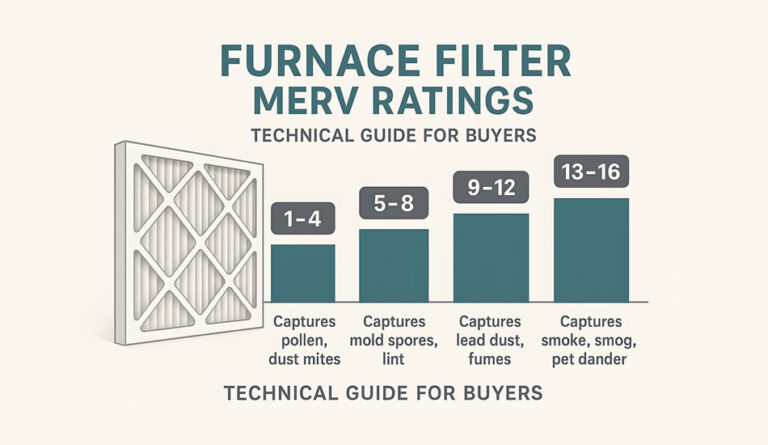
Enhanced filtration improves particle-level air quality. Upgrading from a MERV-8 to a MERV-11 filter captures a higher percentage of mold spores, dust mite allergens, and fine particulates while maintaining adequate airflow in most residential systems. For homes where occupants have respiratory sensitivities, a standalone HEPA air purifier in the bedroom provides medical-grade filtration in the space where you spend the most consecutive hours.
UV germicidal lights installed inside the air handler irradiate the evaporator coil surface continuously, killing mold and bacteria before they colonize. These are not air purifiers — they do not treat the air passing through the system. They treat the coil itself, preventing the biological growth that turns your HVAC system into a contamination source. In Savannah’s humidity, where evaporator coil contamination is essentially guaranteed without intervention, UV lights provide meaningful protection for $500 to $1,200 installed.
Regular professional maintenance ties everything together. Annual evaporator coil inspection and cleaning, condensate drain clearing, filter evaluation, and ductwork assessment keep the system functioning as an air quality asset rather than an air quality liability. In Savannah’s demanding environment, maintenance is not about extending equipment life (though it does that too) — it is about keeping the system clean enough to do its air quality job.
The Behavioral Component
Equipment solutions manage humidity mechanically, but homeowner behavior affects how much moisture the system has to manage in the first place.
Ventilation habits matter. Opening windows on mild days feels natural but introduces outdoor humidity that the HVAC system must then remove. In Savannah, a “nice” spring day with 75°F temperatures often carries a dew point of 65°F or higher — comfortable outdoors but problematic indoors. If you open windows for extended periods, indoor humidity can spike to 65-70% within an hour, and the HVAC system may take several hours to bring it back down after you close them.
Exhaust fans in kitchens and bathrooms should run during and for 15 to 20 minutes after cooking and showering. These activities produce enormous amounts of indoor moisture — a single shower adds roughly a pint of water to the indoor air. In homes where exhaust fans are undersized, non-functional, or simply not used, these moisture sources compound the existing humidity challenge.
Indoor drying of clothes, uncovered fish tanks, large numbers of houseplants, and standing water in sinks or tubs all contribute to indoor moisture load. None of these is problematic individually, but in combination with Savannah’s already-challenging humidity baseline, they can push a borderline home over the threshold where problems begin.
Getting a Professional Assessment
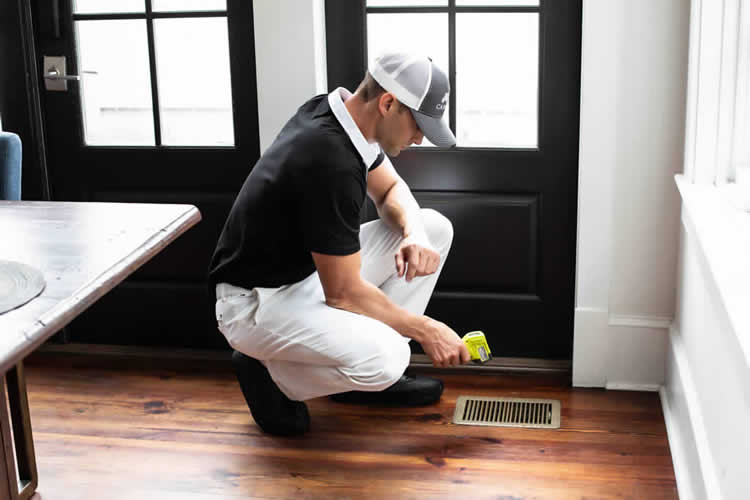
At Carriage Heating & Cooling, we evaluate indoor air quality as part of our diagnostic and maintenance process. We measure indoor humidity levels, inspect evaporator coil condition, assess ductwork for condensation and contamination, and recommend targeted solutions based on what your specific home actually needs — not a one-size-fits-all product package. Whether the answer is a coil cleaning, a whole-home dehumidifier, UV lights, or simply adjusting your system’s blower speed, we explain what we find and let you decide which improvements are worth the investment.
Call (912) 306-0375 for an air quality assessment anywhere in Pooler, Savannah, Richmond Hill, Tybee Island, or the surrounding area.