How Much Does AC Repair Cost in Savannah?
AC repair in Savannah typically costs between $150 and $600 for common fixes, with most homeowners paying around $350 for a standard service call and repair. Complex repairs like compressor replacement or refrigerant leak repair can run $800 to $2,500 or more depending on the system type, refrigerant required, and the extent of the damage. These ranges reflect 2025 pricing specific to the Greater Savannah and Pooler market.
The wide range exists because “AC repair” covers everything from a $150 capacitor swap to a $2,500 compressor replacement. What you actually pay depends on what broke, how old your system is, and whether the fix requires refrigerant — which has gotten significantly more expensive in the last few years. Below is a breakdown of the most common repairs Savannah-area homeowners face, what drives the cost of each, and how to know whether a quoted price is fair.
What Goes Into the Cost of an AC Repair?
Every AC repair bill has two main components: the diagnostic fee and the actual repair cost. Understanding both helps you evaluate any quote you receive.
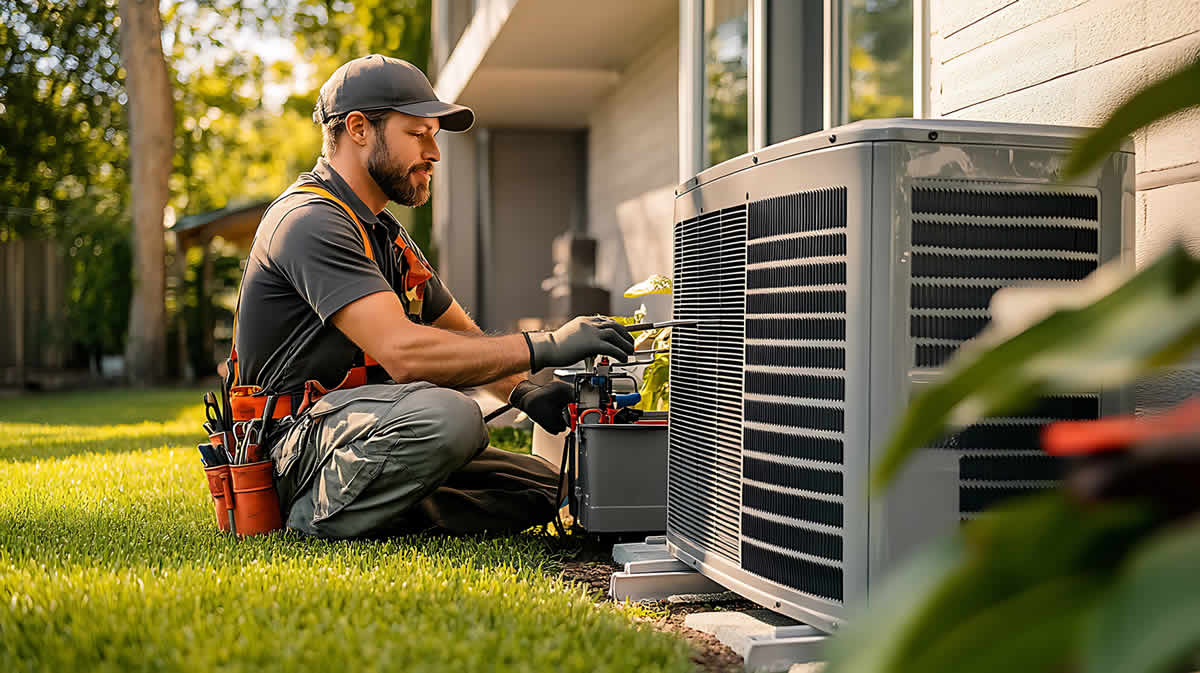
The diagnostic fee — sometimes called a service call fee — covers the technician’s time to travel to your home, inspect the system, and identify the problem. In the Savannah market, diagnostic fees typically range from $75 to $150. Some companies waive this fee if you proceed with the repair, while others build it into the total. Neither approach is inherently better, but you should ask upfront so the final number does not surprise you.
The repair cost itself includes parts and labor. Labor rates for HVAC technicians in coastal Georgia generally fall between $75 and $150 per hour, though most companies quote flat-rate pricing per repair rather than hourly billing. Flat-rate pricing means you pay the same amount whether the repair takes 30 minutes or two hours, which protects you from paying more if the technician encounters unexpected difficulty.
Parts pricing varies enormously depending on whether the component is universal or manufacturer-specific. A universal run capacitor might cost $15 wholesale, while a proprietary circuit board for a Carrier or Trane system could cost $400 or more just for the part. This is one of the biggest factors in why two repairs that seem similar can have wildly different price tags.
Common AC Repairs and What They Cost in 2025
Here is what Savannah-area homeowners can expect to pay for the most frequently needed repairs. These ranges include both parts and labor and reflect pricing from licensed HVAC contractors — not handyman services or unlicensed operators, which may quote lower but carry real risk.
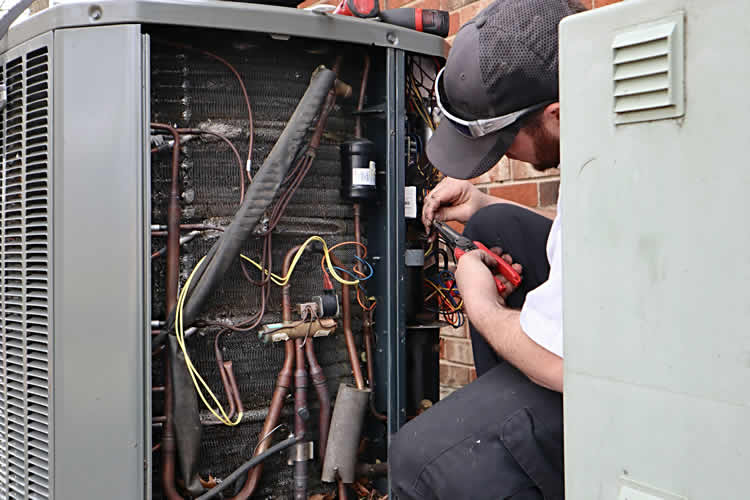
Capacitor replacement runs $150 to $300. The capacitor is one of the most common failure points in any AC system, and it fails more frequently in extreme heat. Given that Savannah regularly pushes 95°F with brutal humidity from May through September, capacitors in this area tend to have shorter lifespans than in milder climates. The repair itself is straightforward and usually takes under an hour.
Contactor replacement costs $175 to $400. The contactor is an electrical switch that controls power flow to the compressor and condenser fan. When it fails, the outdoor unit either will not turn on at all or runs continuously without cycling off. This is another heat-accelerated failure, and it is common enough in Pooler and Savannah that most technicians carry replacement contactors on their trucks.
Refrigerant recharge ranges from $200 to $600, but this number is deceptive because it depends entirely on the refrigerant type. Systems manufactured before 2010 often use R-22 (Freon), which was phased out of production in 2020 under EPA regulations. The remaining supply of R-22 is limited and expensive — expect to pay $80 to $150 per pound, and most systems need 2 to 4 pounds during a recharge. Newer systems use R-410A or R-454B, which cost significantly less per pound. If your system needs frequent recharges, you have a leak, and paying for refrigerant without fixing the leak is throwing money away.
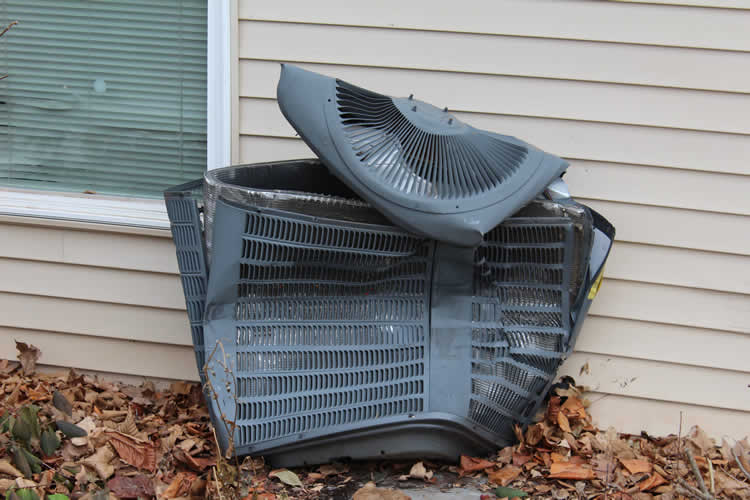
Evaporator or condenser coil repair costs $400 to $1,200. Coil leaks are particularly common in the Savannah area because of salt air exposure. Homes in Tybee Island, Wilmington Island, and the eastern parts of Savannah experience accelerated corrosion on outdoor condenser coils from salt-laden coastal air. Coil repairs involve either patching the leak — which is a temporary fix at best — or replacing the coil entirely. If the coil has multiple leaks or the system is over 10 years old, replacement of the entire outdoor unit often makes more financial sense.
Compressor replacement is the most expensive common repair, ranging from $1,200 to $2,500. The compressor is the heart of the system, and when it fails in a unit that is 8 to 15 years old, you are often better off replacing the entire outdoor unit or the whole system rather than sinking $2,000 into aging equipment. A good technician will walk you through the math honestly rather than pushing whichever option generates more revenue.
Blower motor replacement costs $400 to $800. The blower motor is inside your air handler and pushes conditioned air through your ductwork. Variable-speed ECM motors cost more to replace than standard PSC motors, but they are increasingly common in systems installed after 2015. If your indoor unit is running but you feel weak or no airflow from the vents, the blower motor is a likely suspect.
Circuit board or control board replacement runs $500 to $1,200. Modern HVAC systems rely on electronic control boards that manage system operation, and these boards are almost always manufacturer-specific. A Lennox control board cannot be swapped with a Goodman board. This is where brand-specific parts pricing can push a repair bill much higher than expected, and it is worth asking your technician whether an aftermarket or universal board is an option.
Why AC Repairs Cost More in Coastal Georgia
Savannah’s climate is not just hot — it is relentlessly humid. Relative humidity routinely sits above 70% from April through October, and that combination of heat and moisture creates conditions that accelerate wear on HVAC systems in ways that homeowners in drier climates simply do not experience.
High humidity forces your AC system to work harder on dehumidification, which means longer run cycles, more stress on the compressor, and faster degradation of electrical components. The salt air along the coast corrodes outdoor condenser coils and copper refrigerant lines faster than inland environments. And the intense afternoon thunderstorms that roll through the Savannah area regularly cause power surges that damage capacitors, contactors, and circuit boards — even with surge protectors in place.
All of this means that the average HVAC system in Savannah works harder and wears out faster than the same system in Atlanta or Charlotte. It also means that preventive maintenance is not optional here — it is the single most effective way to reduce your lifetime repair costs.
How to Know If You Are Getting a Fair Price
Getting a second opinion on an AC repair is not rude — it is smart, especially on any repair quoted above $500. But there are faster ways to evaluate whether a price is reasonable before you start calling around.
First, ask for an itemized breakdown. A reputable company will separate the diagnostic fee, parts cost, and labor without hesitation. If a technician quotes a single lump number and resists breaking it down, that is a red flag worth paying attention to.
Second, ask what part is being replaced and whether it is OEM (original equipment manufacturer) or aftermarket. OEM parts carry a higher price tag but are guaranteed to be compatible. Aftermarket parts are often perfectly functional and significantly cheaper, but not every technician will offer them as an option unless you ask.
Third, consider the age of your system when evaluating any repair over $800. The general rule of thumb is this: if the repair cost exceeds 50% of the value of a new system and your current equipment is over 10 years old, replacement usually makes better financial sense over the next five years. A $1,500 compressor repair on a 12-year-old system is rarely a good investment when a new, more efficient system might cost $5,000 to $7,000 installed.
Finally, verify licensing. Georgia requires HVAC contractors to hold either a Conditioned Air Contractor license or work under a licensed qualifying agent. The Georgia Secretary of State licensing verification tool lets you confirm this in about 30 seconds. Unlicensed operators may quote 30-40% less, but they cannot pull permits, they carry no liability insurance, and their work will void most manufacturer warranties.
When a Repair Is Not Worth It
There are situations where the smartest financial move is to stop repairing and start replacing. This is not always an easy conversation, and some companies avoid having it because a $600 repair generates immediate revenue while a replacement consultation takes more time.
Here are the signals that repair dollars are being wasted. Your system uses R-22 refrigerant, which will only get more expensive as remaining supplies dwindle. You have spent more than $500 on repairs in the last 12 months. The system is over 12 years old and requires a repair exceeding $1,000. Multiple components are failing in sequence, which usually indicates system-wide degradation rather than isolated part failure. Or your energy bills have climbed steadily over the past two to three years despite no changes in usage — a sign that efficiency is declining as the system ages.
None of these factors alone means you must replace your system tomorrow. But when two or three apply simultaneously, the math starts favoring replacement heavily, especially when you factor in the energy savings of modern equipment rated at 16 SEER2 or higher compared to the 10-13 SEER systems that were standard 12 to 15 years ago.
What Carriage Charges and Why
At Carriage Heating & Cooling, we use flat-rate pricing for repairs, which means the quote you receive is the price you pay regardless of how long the repair takes. Our diagnostic fee is applied to the repair cost if you move forward with the work. We provide itemized breakdowns on every invoice, and if a repair does not make financial sense given the age and condition of your system, we will tell you that directly — even though it means we do not collect a repair fee that day.
We service all major brands across Pooler, Savannah, Richmond Hill, and the surrounding areas. If you need a repair quote or want a second opinion on one you have already received, call us at (912) 306-0375.