Ductless Mini-Split Cost in Savannah: Single-Zone vs. Multi-Zone Pricing
A single-zone ductless mini-split system installed in the Savannah area costs $3,000 to $5,500, while a multi-zone system serving two to five rooms costs $5,500 to $15,000 — with most whole-home installations landing between $8,000 and $12,000 for three to four zones. These prices include equipment, installation labor, electrical work, and line set routing. The per-zone cost decreases as you add zones because the outdoor condenser (the most expensive single component) is shared across all indoor units, which means going from two zones to three adds $1,500 to $2,500 in incremental cost rather than doubling the price.
Mini-split pricing confuses homeowners because the installed cost varies more dramatically than central air pricing. Two identical-looking single-zone installations can differ by $1,500 or more depending on the brand, the indoor unit type, the line set routing complexity, and whether the electrical service needs modification. Understanding what drives the number at each level — and what is worth paying more for versus where you can save without sacrificing performance — helps you evaluate quotes with the same clarity you would bring to any other five-figure home investment.
What Determines the Price of a Single-Zone System
A single-zone system is one outdoor condenser connected to one indoor unit. It cools and heats one room or one contiguous open space, and it is the entry point for homeowners adding mini-split cooling to a specific area — a master bedroom, a garage conversion, a sunroom, or a bonus room over the garage that the central system cannot reach.
The indoor unit capacity is the first cost variable. Mini-split indoor units are sized in BTU, with residential units typically ranging from 9,000 BTU (three-quarter ton, suitable for 250 to 400 square feet) to 24,000 BTU (two tons, suitable for 800 to 1,200 square feet). Larger capacity units cost more — a 9,000 BTU system might start at $3,000 installed, while a 24,000 BTU system serving a large open living area reaches $5,000 to $5,500 installed.
In Savannah’s climate, capacity selection must account for humidity load, not just square footage. A 300-square-foot bedroom with one exterior wall and good insulation might need only 9,000 BTU in Denver. That same bedroom in Pooler, with Savannah’s 77-degree wet bulb design temperature and persistent humidity infiltration, may need 12,000 BTU to handle both the sensible cooling load and the latent moisture removal. Sizing a mini-split too small for Savannah’s conditions means the unit runs at maximum capacity continuously during peak summer without reaching setpoint — and oversizing creates the short-cycling humidity problem that plagues oversized central systems. The correct size depends on a room-level load assessment, not a square footage estimate.
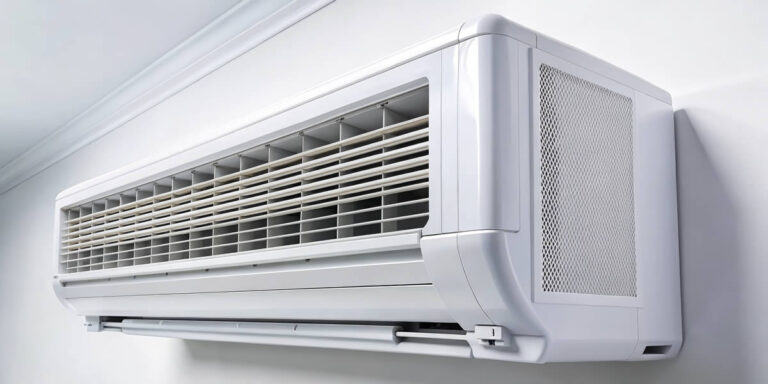
The indoor unit type affects pricing significantly. Wall-mounted units are the least expensive option — they mount on a bracket high on the wall, require only the 3-inch penetration for the line set, and take one to two hours to install. Ceiling cassette units cost $500 to $1,000 more than wall-mounted units of the same capacity because the unit itself is more expensive and installation requires ceiling access, structural support, and sometimes drywall modification to create the flush-mount opening. Floor-standing consoles add $300 to $600 over wall-mounted pricing. Concealed ducted units, which hide inside a closet, soffit, or ceiling cavity and distribute air through short duct runs, carry the highest premium — $800 to $1,500 more than wall-mounted — because they require construction of the concealment space plus the short ductwork runs and supply grilles.
For most Savannah installations, wall-mounted units deliver the best value. They are the most affordable, the most efficient (because air flows directly from the unit into the room without any duct losses), and the simplest to maintain since the filters and coil are easily accessible. The aesthetic compromise — a visible white unit high on the wall — is the primary reason homeowners choose other configurations. In historic Savannah homes where preserving interior character matters, ceiling cassettes or concealed ducted units may justify the premium despite the higher cost.
Brand Pricing: What the Tiers Actually Mean
Brand selection creates a clear pricing tier structure in the mini-split market, and the differences are worth understanding beyond the sticker price.
Premium brands — Mitsubishi Electric and Fujitsu — command $500 to $1,500 more per system than mid-tier alternatives. Mitsubishi’s residential line (the M-Series and P-Series) has the deepest installer network in the Savannah market and the longest track record in the U.S., which means parts availability and technician familiarity are excellent. Fujitsu offers comparable performance and reliability at a slightly lower price point. Both manufacturers require their installers to complete brand-specific training and certification programs, which limits the installer pool but generally ensures higher installation quality.
Mid-tier brands — LG, Samsung, Carrier (which rebrands Midea equipment for its ductless line), Daikin, and Gree — offer strong performance at lower equipment cost. The efficiency ratings and feature sets between premium and mid-tier brands have converged significantly in recent years. A current-generation LG or Daikin wall unit delivers SEER2 ratings, humidity management, and inverter compressor technology that are functionally equivalent to what Mitsubishi offered two product generations ago. For a straightforward residential installation, a mid-tier system from a reputable manufacturer provides excellent value.
The cost difference between brands is not just the equipment itself. Mid-tier brands have fewer installer certification requirements, which means more companies can offer them — potentially at more competitive pricing — but installation quality varies more widely. The equipment is only as good as the installation, and a mid-tier system installed perfectly will outperform and outlast a premium system installed carelessly. When evaluating quotes across brands, weight the installer’s track record with that specific brand at least as heavily as the brand name itself.
Line Set Routing: The Hidden Cost Variable
The refrigerant line set connecting the outdoor condenser to the indoor unit is the installation variable that creates the most pricing unpredictability. A straightforward installation — indoor unit mounted on an exterior wall with the outdoor condenser directly outside on the other side of the same wall — requires a 3-inch hole through the wall and roughly 10 to 15 feet of line set. This is the installation the manufacturer envisions, and it keeps costs at the low end of the range.
Reality in Savannah’s older homes is frequently more complicated. The ideal room for the indoor unit may share no exterior wall with a suitable condenser location. The line set may need to run vertically through a wall cavity, horizontally through an attic, around architectural obstacles, or through a chase that must be constructed to conceal the lines. Every additional foot of line set adds material cost, and every routing complication adds labor time.
A line set run of 25 feet or less is standard and included in most base installation quotes. Runs of 25 to 50 feet add $200 to $500 in material and labor. Runs exceeding 50 feet — which occur in larger homes or when the condenser must be located far from the indoor unit for aesthetic or HOA reasons — add $500 to $1,000 and may require a larger line set diameter to maintain proper refrigerant flow. Maximum line set length varies by brand and model, typically maxing out at 75 to 100 feet for residential equipment.
Line set concealment is an additional cost that many homeowners do not anticipate. The default installation routes the line set along the exterior wall from the indoor unit penetration to the condenser location, secured with clips and covered by a plastic line hide (a rectangular channel that matches the wall color). This is functional and tidy but visible from the exterior. For homes where exterior appearance is a priority — particularly in Savannah’s historic districts where the Historic District Board of Review may have opinions about visible equipment — routing the line set through the wall cavity or attic adds $300 to $800 in labor but eliminates the visible exterior run.
Multi-Zone Pricing: How the Math Changes
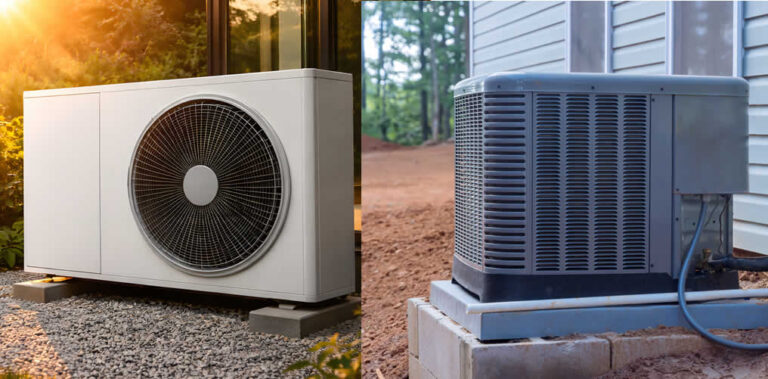
Multi-zone systems use a single outdoor condenser with multiple refrigerant connections serving two to five indoor units independently. The outdoor unit is physically larger and more expensive than a single-zone condenser, but it replaces what would otherwise be two to five separate outdoor units — each requiring its own concrete pad, electrical connection, and exterior wall space.
The economics of multi-zone systems favor the homeowner as zone count increases because the condenser cost is amortized across more indoor units. Here is how the installed pricing typically breaks down in the Savannah market for wall-mounted units using a mid-tier brand.
A two-zone system (one outdoor condenser, two indoor units) costs $5,500 to $8,000 installed. The outdoor condenser accounts for roughly $2,500 to $3,500 of that total, and each indoor unit with its line set and installation accounts for $1,500 to $2,500. The per-zone cost is approximately $2,750 to $4,000.
A three-zone system costs $7,500 to $10,500 installed. Adding the third indoor unit increases the total by $1,500 to $2,500 over the two-zone price because the outdoor condenser is already sized for the additional capacity. Most multi-zone condensers support up to five indoor connections regardless of how many are initially installed, which means you can add zones later without replacing the outdoor unit. The per-zone cost drops to approximately $2,500 to $3,500.
A four-zone system costs $9,500 to $13,000 installed. Per-zone cost falls further to approximately $2,375 to $3,250.
A five-zone system covering most or all of a typical Savannah home costs $11,000 to $15,000 installed. Per-zone cost reaches its lowest point at approximately $2,200 to $3,000.
These ranges assume wall-mounted indoor units, standard line set runs under 25 feet per unit, and existing electrical service adequate for the system. Upgrading to ceiling cassettes, extending line sets, or requiring electrical panel modifications pushes pricing toward the upper end or beyond.
Premium brands add $1,000 to $3,000 to the total system price at the multi-zone level — a smaller percentage premium than at the single-zone level because the indoor unit cost is a smaller share of the total when the expensive multi-zone condenser is factored in.
The Multi-Zone Capacity Question
One technical detail about multi-zone systems affects both pricing and performance in Savannah’s climate and deserves attention during the quoting process.
Most multi-zone outdoor condensers are rated for a total capacity that equals the sum of the connected indoor units, but the system cannot deliver full rated capacity to every indoor unit simultaneously. A condenser rated at 42,000 BTU connected to four indoor units rated at 12,000 BTU each (totaling 48,000 BTU of connected indoor capacity) prioritizes output to the units with the highest demand and reduces output to units closer to their setpoint.
In practice, this capacity sharing is rarely a problem in residential applications because not every room reaches peak load at the same time — the west-facing bedroom peaks in the afternoon while the east-facing living room peaked in the morning. But in a Savannah home where every room is fighting 95-degree outdoor heat and 75% humidity simultaneously during a July afternoon, a multi-zone system with indoor capacity significantly exceeding the outdoor condenser’s rated output may struggle to maintain setpoint in all zones at once.
The solution is matching the outdoor condenser capacity to the realistic peak simultaneous load rather than the theoretical maximum. An experienced installer in the Savannah market accounts for this by either selecting a condenser with capacity closer to the total indoor unit ratings, or by slightly undersizing the indoor units in rooms with lower peak loads (a bedroom that benefits from shade trees, an interior room with minimal exterior wall exposure) to bring the total connected capacity in line with the condenser’s output.
This is a conversation worth having during the quoting process because it affects both the system’s pricing and its performance on the 10 or 15 worst-case days per summer when the capacity question matters most.
Electrical Requirements and Costs
Every mini-split installation requires a dedicated electrical circuit from the main panel to the outdoor condenser. Single-zone systems typically require a 20 to 30 amp, 240-volt circuit. Multi-zone systems serving three or more indoor units may require a 30 to 50 amp circuit depending on the system’s total capacity.
If your electrical panel has available breaker slots and adequate total amperage capacity, adding the circuit costs $200 to $500 for the wire run, breaker, and disconnect switch at the condenser location. In older Savannah homes with 100-amp or 150-amp electrical panels that are already near capacity, the mini-split installation may require a panel upgrade to 200 amps — an additional $1,500 to $3,000 that significantly increases the total project cost.
This is a cost that often surprises homeowners because it has nothing to do with the mini-split equipment itself — it is about the home’s electrical infrastructure. A 1940s Savannah home with its original 100-amp panel, already supporting modern kitchen appliances, a water heater, a clothes dryer, and several window AC units, may not have the capacity to add a multi-zone mini-split without upgrading the panel first. A qualified electrician can evaluate panel capacity during the quoting process, and any reputable mini-split installer should include this assessment in their site visit rather than discovering the problem on installation day.
What Is Not Included in the Base Price
Several cost items fall outside the standard installation quote and can add $500 to $3,000 or more to the total project.
A concrete or composite pad for the outdoor condenser costs $50 to $200. Most installations require one, and most quotes include it, but verify. Structural modifications for ceiling cassettes or concealed ducted units — building soffits, reinforcing ceiling joists, creating closet enclosures — are typically quoted separately because they involve carpentry and finish work. Budget $500 to $2,000 depending on scope. Permit fees in Chatham County and the City of Pooler are modest at $50 to $150 and should be included in a professional installation quote. Wall patching and painting around the indoor unit penetration and line set routing is sometimes included and sometimes left for the homeowner — clarify during the quoting process, particularly in historic homes where matching original plaster or specialty finishes requires specific skills.
How to Compare Mini-Split Quotes
When evaluating competing quotes, confirm that each includes the same scope. The three most common sources of quote disparity are brand differences (premium vs. mid-tier), indoor unit type differences (wall-mount vs. cassette vs. concealed), and line set routing assumptions (exterior run vs. concealed vs. extended).
Ask each contractor to itemize the quote into equipment (outdoor unit, indoor units, line sets), labor, electrical work, and any additional scope items. This makes it possible to compare the installation labor component — which is where contractor quality shows up — rather than conflating equipment price differences with labor price differences.
Verify that the quote includes a vacuum and refrigerant charge to manufacturer specifications, not an estimated charge. Confirm that the installer will perform a commissioning test after startup, measuring refrigerant pressures and verifying each indoor unit’s output. And confirm that the contractor will register the equipment with the manufacturer for the full warranty — a step that takes five minutes but protects thousands of dollars in future coverage.
At Carriage Heating & Cooling, our mini-split quotes itemize every component and include all electrical work, permits, and system commissioning. We install Mitsubishi, Fujitsu, Daikin, and other major brands and recommend based on your budget and priorities, not our margin structure. Call (912) 306-0375 for a free site assessment and quote anywhere in Pooler, Savannah, Richmond Hill, Tybee Island, or the surrounding area.