Do Ductless Mini-Splits Dehumidify? What Savannah Homeowners Need to Know
Do Ductless Mini-Splits Dehumidify? What Savannah Homeowners Need to Know
Yes, ductless mini-split systems dehumidify effectively—often better than many traditional central AC units in Savannah’s climate—because their variable-speed inverter compressors allow longer, slower cooling cycles that remove significantly more moisture per hour of operation than short-cycling fixed-speed systems.
Bottom line: In the Greater Savannah area, where summer relative humidity averages 75-85% and dew points frequently exceed 70°F from May through October, a properly sized and installed mini-split can maintain indoor relative humidity in the 45-55% comfort range even during peak heat waves, typically outperforming older or oversized central systems by extracting 20-40% more water per day under the same conditions.
Most homeowners assume any air conditioner dehumidifies equally well because cooling and moisture removal happen simultaneously. The reality is more nuanced. Dehumidification occurs when warm, humid indoor air passes over the cold evaporator coil inside the indoor unit, dropping the air temperature below its dew point and causing water vapor to condense into liquid that drains away. The amount of moisture removed depends on three main factors: how cold the coil gets, how long air contacts the coil, and how much air moves across it per minute.
In Savannah’s high-humidity environment, the goal is not just to lower temperature but to lower the absolute moisture content (grains of moisture per pound of dry air) enough to reach comfortable indoor levels. Traditional single-stage central AC systems often oversize for peak load, causing short cycles—10-15 minutes on, then off before the coil reaches optimal dehumidification temperature or before sufficient moisture condenses. This leaves homes feeling cool by thermometer but clammy at 60%+ relative humidity.
Ductless mini-splits use inverter technology to modulate compressor speed. Instead of blasting full capacity and shutting off, they ramp down to match the load, running longer cycles at lower capacity. Longer runtime allows the coil to stay colder longer and gives more time for condensation to form and drain. Many models maintain coil surface temperatures 5-10°F lower during part-load operation than fixed-speed units, extracting measurably more water—often 0.5-1.5 pints per hour more in moderate conditions.
Why Mini-Splits Excel at Dehumidification in Coastal Georgia
Savannah summers deliver heat indices above 105°F with dew points that keep indoor humidity stubbornly high unless the system runs long enough to pull moisture aggressively. Mini-splits address this directly through:
Variable refrigerant flow that adjusts to real-time load, preventing short-cycling even when outdoor temperature drops slightly in the evening or after a thunderstorm.
Dedicated dry modes on many brands (Mitsubishi, Daikin, Fujitsu) that prioritize dehumidification by running the fan slower and the compressor at reduced capacity, focusing on moisture removal with minimal temperature drop—ideal during shoulder seasons or rainy stretches when you want dry air without overcooling.
No duct losses mean all dehumidified air reaches the conditioned space immediately. Central systems lose 20-30% of their cooling and dehumidification capacity through leaky or unconditioned ducts in attics that reach 130-150°F in summer.
Independent zoning allows targeted dehumidification—run one bedroom unit longer at night without cooling the whole house, maintaining lower humidity where you sleep.
Many units include built-in humidity sensors or pair with compatible controls that maintain a setpoint relative humidity (typically 50%) by modulating operation, something most basic central thermostats cannot do.
Common Myths and Real-World Performance in Savannah
Myth: Mini-splits don’t dehumidify as well because they are “smaller” systems. Reality: Capacity is sized per zone, not whole-home. A properly calculated single-zone unit for a bedroom or addition removes moisture at the same rate—or higher—than an equivalent central system serving that space, without duct inefficiency.
Myth: They overcool to dehumidify, wasting energy. Reality: Inverter-driven units avoid this by slowing down once temperature nears setpoint, continuing to dehumidify at reduced power. In humid conditions, many homeowners report being able to raise the temperature setpoint 2-4°F higher than with a central system while feeling drier and more comfortable.
Myth: All mini-splits perform the same. Reality: Cold-climate or high-efficiency models (SEER 20+) with advanced inverter compressors and larger coils dehumidify noticeably better than entry-level units. Look for models rated for low-ambient operation if heating is also a factor.
In practice, homeowners in Pooler, Richmond Hill, and coastal areas like Tybee Island often find that after switching to ductless, indoor humidity stabilizes 5-10 percentage points lower than before, with fewer musty odors, less window condensation, and reduced allergy symptoms—even on days when outdoor dew points push 75°F+.
Limitations and What to Watch For
Undersized mini-splits struggle to dehumidify because they run at full capacity constantly without reaching part-load efficiency. Always insist on a room-by-room Manual J load calculation.
Very high infiltration (poorly sealed older homes) can overwhelm even a good mini-split. Address air leaks first for best results.
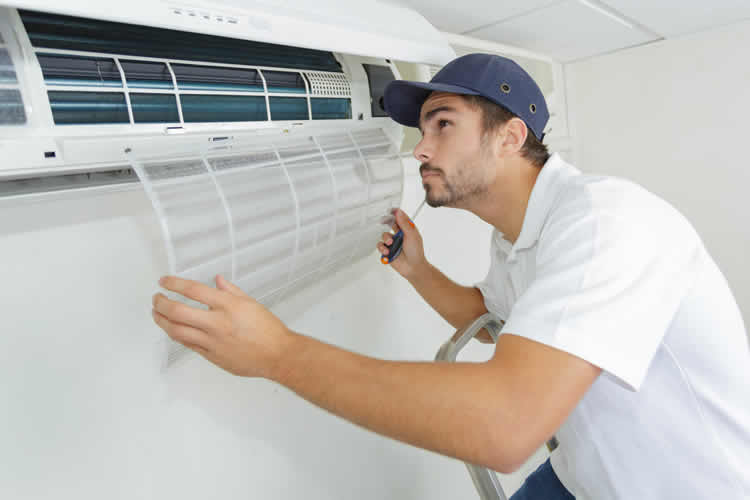
Maintenance matters—dirty indoor coils reduce both cooling and dehumidification. Monthly filter cleaning and annual professional coil/drain service keep performance high.
Carriage Heating & Cooling sizes and installs ductless systems with precise attention to humidity performance in Greater Savannah’s demanding climate, providing load calculations, humidity monitoring during commissioning, and ongoing maintenance to ensure dry, comfortable air year-round in Pooler, Savannah, Richmond Hill, Rincon, and surrounding communities.