Adding AC to an Older Savannah Home Without Ductwork: Your Options
The most practical way to add air conditioning to an older Savannah home without existing ductwork is a ductless mini-split system, which costs $3,000 to $8,000 installed for one to three zones and requires no wall demolition, no attic ductwork runs, and no major structural modifications.
For whole-home cooling across four or more rooms, a multi-zone mini-split system ($8,000 to $15,000) or a high-velocity small-duct system like SpacePak or Unico ($12,000 to $25,000) are the primary alternatives — each with distinct tradeoffs in cost, aesthetics, and performance that matter especially in Savannah’s historic homes where preservation and humidity management are both serious considerations.
Savannah has one of the largest National Historic Landmark Districts in the United States, and the surrounding neighborhoods — Ardsley Park, Parkside, Thomas Square, Starland, Baldwin Park, Midtown — are filled with homes built between the 1880s and 1950s that were designed for cross-ventilation and ceiling fans, not mechanical cooling.
These homes were not built with duct chases, dropped ceilings, or utility closets sized for modern air handlers. Adding central air conditioning to a structure that was never designed for it requires either finding creative paths for ductwork that do not destroy the architectural character of the home, or choosing a system that does not need ductwork at all.
The good news is that the technology has matured to the point where several viable options exist. The bad news is that each option involves real compromises, and understanding those compromises upfront prevents expensive regret.
Option One: Ductless Mini-Splits
Ductless mini-split systems are the default recommendation for older homes without ductwork, and for good reason. They provide efficient, zone-controlled cooling and heating with minimal installation impact on the structure.
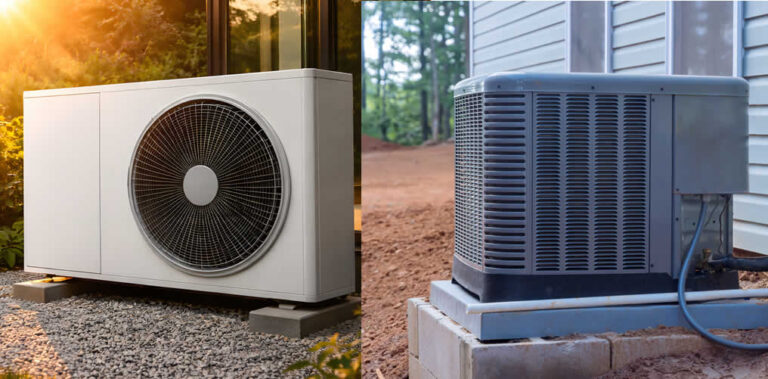
A mini-split system consists of an outdoor condenser unit connected to one or more indoor air-handling units by a small refrigerant line set and a condensate drain, all routed through a 3-inch hole in an exterior wall. There are no ducts, no large penetrations, and no attic modifications. A single-zone system (one outdoor unit, one indoor unit) can be installed in a day. Multi-zone systems (one outdoor unit serving two to five indoor units) take one to two days.
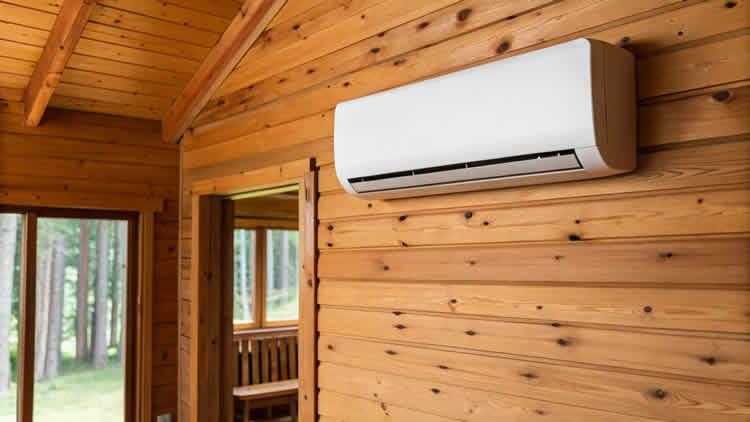
The indoor units come in several configurations. Wall-mounted units are the most common and least expensive — they mount high on a wall and distribute air downward and outward across the room. Ceiling cassette units mount flush with the ceiling and distribute air in multiple directions, providing more even coverage in larger rooms.
Floor-standing units sit at baseboard level and direct air upward, which works well for rooms with limited wall space or very high ceilings. Concealed ducted units hide inside a small soffit, closet, or ceiling cavity and distribute air through short duct runs — offering the most invisible installation but requiring some construction to create the concealment space.
For Savannah’s historic homes, the aesthetic question is usually the deciding factor. A wall-mounted mini-split unit is a white rectangular box roughly 32 inches wide and 12 inches tall mounted near the ceiling. It is functional and efficient but undeniably modern-looking in a room with original plaster crown molding, 12-foot ceilings, and heart pine floors.
Some homeowners accept the visual compromise without hesitation. Others find it unacceptable in their front parlor but perfectly fine in bedrooms and back rooms. Ceiling cassettes offer a subtler appearance — just a flat grille flush with the ceiling — but require ceiling access for installation that may not be feasible in homes with ornamental plaster ceilings.
The performance case for mini-splits in Savannah is strong. Modern inverter-driven mini-splits adjust their output continuously to match the cooling load, which means they run at lower speeds for longer periods rather than cycling on and off like conventional systems.
In a high-humidity environment, this operating pattern is ideal — longer run times at reduced capacity pull significantly more moisture from the air per cooling cycle than a conventional system that blasts cold air for 10 minutes and shuts off. Homeowners who switch from window units to mini-splits in older Savannah homes consistently report that the humidity improvement is more noticeable than the temperature improvement.
Pricing for mini-split installation in the Savannah market breaks down roughly as follows. A single-zone system (one room) costs $3,000 to $5,000 installed, depending on the unit’s capacity, brand, and the complexity of the line set routing.
A two-zone system costs $5,000 to $8,000. A three-zone system costs $7,000 to $10,000. A four or five-zone system serving most or all of a home costs $10,000 to $15,000. These prices include equipment, installation labor, electrical wiring, and line set routing. They do not include any structural modifications like building soffits for concealed units or patching plaster around penetrations.
Option Two: High-Velocity Small-Duct Systems
High-velocity systems — SpacePak and Unico are the two major manufacturers — take a fundamentally different approach. They use a compact air handler connected to a network of small-diameter flexible ducts (typically 2 to 3 inches in diameter) that snake through wall cavities, floor joists, and ceiling spaces to deliver conditioned air through small, round outlets roughly the size of a coffee cup lid.
The appeal for historic homes is obvious: the ductwork is small enough to fit inside existing wall and ceiling cavities without requiring the large rectangular chases that conventional ductwork demands. The supply outlets are discreet — far less visually intrusive than a wall-mounted mini-split unit — and can be painted to match walls or ceilings. The system is essentially invisible once installed, which makes it the preferred choice for homeowners who consider the architectural integrity of their historic home non-negotiable.
The performance characteristics differ meaningfully from both conventional central air and mini-splits. High-velocity systems push air through the small ducts at much higher speed than conventional ductwork, creating an aspiration effect that mixes room air more thoroughly and eliminates the stratification (warm ceiling, cool floor) that plagues rooms with high ceilings — a common feature in pre-war Savannah homes. This mixing effect also improves dehumidification because the turbulent air movement brings more moisture-laden air into contact with the cooling coil.
The cost is the primary drawback. A whole-home high-velocity system for a typical 2,000 to 2,500 square foot Savannah home runs $15,000 to $25,000 installed — roughly double the cost of a comparable multi-zone mini-split system. The labor intensity drives the price: routing dozens of small duct runs through old wall cavities, floor joists, and plaster-and-lath construction is painstaking work that takes three to five days even for experienced crews.
Homes with balloon-frame construction (common in Savannah homes built before 1940) offer relatively easy vertical routing through open wall cavities. Homes with platform framing, dense insulation retrofits, or extensively remodeled interiors may have blocked pathways that require creative rerouting.
The air handler for a high-velocity system is smaller than a conventional unit but still requires a dedicated location — a closet, a basement corner, an attic space, or a utility area. Finding that space in a home that was not designed for mechanical equipment is sometimes the limiting factor. The air handler also connects to a conventional outdoor condenser, so you need an appropriate exterior location with adequate clearance.
For homeowners who can afford it and who prioritize the aesthetic preservation of their historic home above all other factors, high-velocity systems are the gold standard. For homeowners who need to balance cost against visual impact, mini-splits deliver comparable comfort at roughly half the price with a more visible but still manageable indoor presence.
Option Three: Conventional Ductwork Retrofit
Installing standard ductwork in an older home is technically possible, but it involves significant construction that fundamentally alters the interior. Conventional rectangular or round metal ducts require chases — enclosed vertical and horizontal pathways — that are typically built by dropping ceilings in hallways, constructing soffits along room perimeters, or running ductwork through closets that lose usable storage space.
In some Savannah homes, the layout accommodates this approach without excessive compromise. A two-story home with a central hallway can sometimes accept a dropped ceiling in the hallway that conceals a main trunk line, with branch runs extending into adjacent rooms through short soffits. Ranch-style homes with accessible crawl spaces or basements can run ductwork below the floor, though true basements are uncommon in Savannah’s low-lying coastal geography and crawl spaces in older homes are often too shallow for practical duct installation.
The cost of a conventional duct retrofit is comparable to high-velocity systems — $12,000 to $22,000 for a complete system including ductwork fabrication and installation, air handler, condenser, and finish work to conceal the ductwork. The advantage over high-velocity is that conventional systems use standard, widely available components and any HVAC company can service them. The disadvantage is the visual and spatial impact: dropped ceilings, soffits, and lost closet space change the character of the home in ways that may conflict with historic preservation goals or personal taste.
For homes in Savannah’s Historic District that are subject to review by the Historic District Board of Review, exterior modifications (including condenser placement and any visible ductwork penetrations) require approval. Interior modifications are generally not regulated by the Board, but homeowners pursuing historic tax credits for rehabilitation work must comply with the Secretary of the Interior’s Standards, which discourage alterations that damage or destroy character-defining features. A ductwork retrofit that requires removing original plaster ceilings or altering significant architectural details may jeopardize tax credit eligibility.
Option Four: Window Units and Portable ACs
Window units and portable air conditioners are the cheapest initial option at $150 to $600 per unit, and for some homeowners, they are the right choice — particularly as a temporary solution while planning a more permanent system, or for homes where only one or two rooms need cooling.
However, as a permanent whole-home solution in Savannah’s climate, they fall short in every category that matters. Cooling capacity is limited to the room where the unit is placed, with no distribution to adjacent spaces. Dehumidification performance is poor compared to mini-splits because window units cycle on and off aggressively rather than running at reduced capacity for extended periods.
Energy efficiency is significantly lower — a typical window unit operates at 10 to 12 CEER (the window unit efficiency metric) compared to 20 to 30 SEER2-equivalent for modern mini-splits. Noise levels are substantially higher. And in Savannah’s historic homes, window units block windows that were designed as the primary source of natural light and ventilation in an era before mechanical cooling existed.
The operating cost penalty adds up fast. Running three window units to cool the main living areas of a Savannah home costs roughly $150 to $250 per month in electricity during the cooling season. A three-zone mini-split system cooling the same spaces costs $60 to $100 per month. The $90 to $150 monthly savings from the mini-split means the system pays back its higher installation cost in three to five years through energy savings alone, with 15 or more years of continued savings after that.
Making the Decision for Your Home
The right choice depends on the intersection of your budget, your aesthetic priorities, and the specific construction of your home.
If your primary concern is cost and you need cooling in one to three rooms, a ductless mini-split system provides the best value. The installation is minimally invasive, the performance in Savannah’s humidity is excellent, and the equipment costs less to operate than any alternative except a high-velocity system of equivalent capacity.
If your primary concern is preserving the interior appearance of a historically significant home and budget is flexible, a high-velocity system delivers near-invisible installation with strong dehumidification performance. The cost is substantial, but for a home you intend to own long-term, the investment preserves both comfort and architectural character.
If your home has the structural characteristics to accommodate conventional ductwork without excessive visual compromise — a central hallway suitable for a dropped ceiling, an accessible crawl space, or closets that can absorb duct chases — a conventional retrofit gives you a standard central air system that any contractor can maintain and service for decades.
The first step in any case is a site assessment by a contractor experienced with older home installations. Not every HVAC company has the expertise to evaluate routing options in a 1920s plaster-and-lath home with balloon framing and 12-foot ceilings. Ask specifically about the contractor’s experience with historic and older home installations before scheduling — the skill set required is different from new construction HVAC work.
At Carriage Heating & Cooling, we work with homeowners across Savannah’s historic neighborhoods, Ardsley Park, Pooler, and the surrounding area to evaluate which cooling option fits each home’s unique construction and the homeowner’s priorities. Call (912) 306-0375 for a site assessment and honest recommendation.